

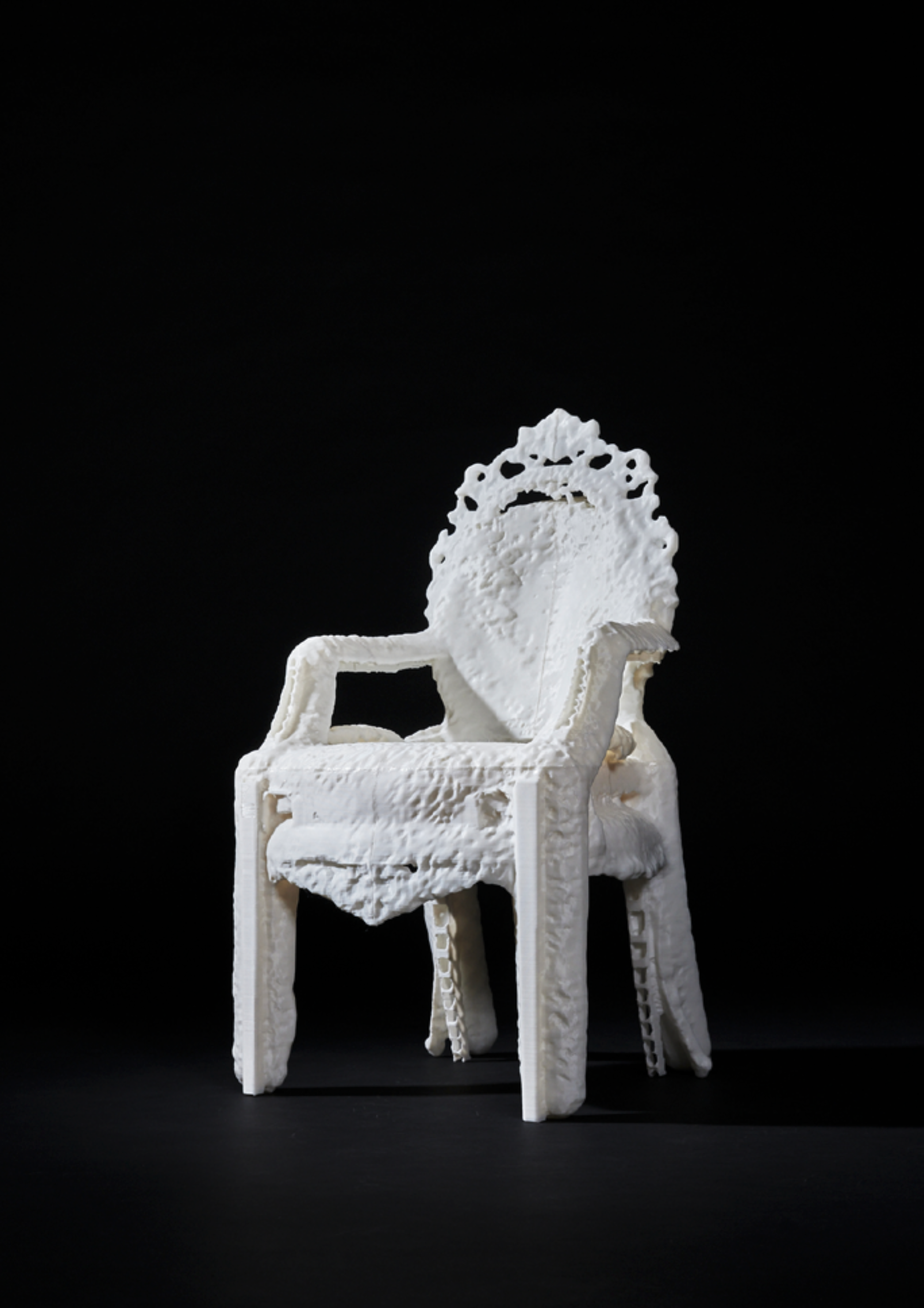
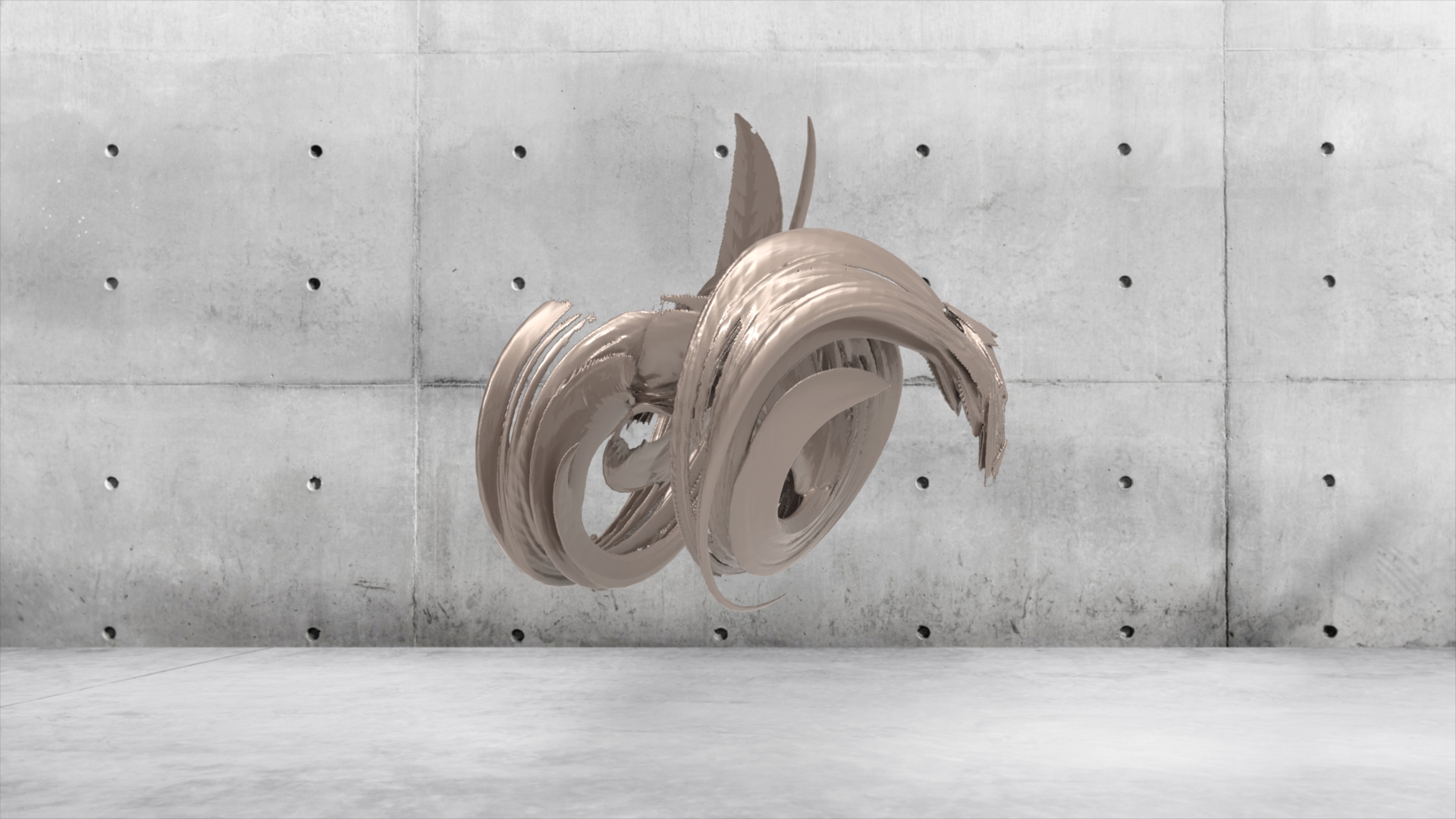
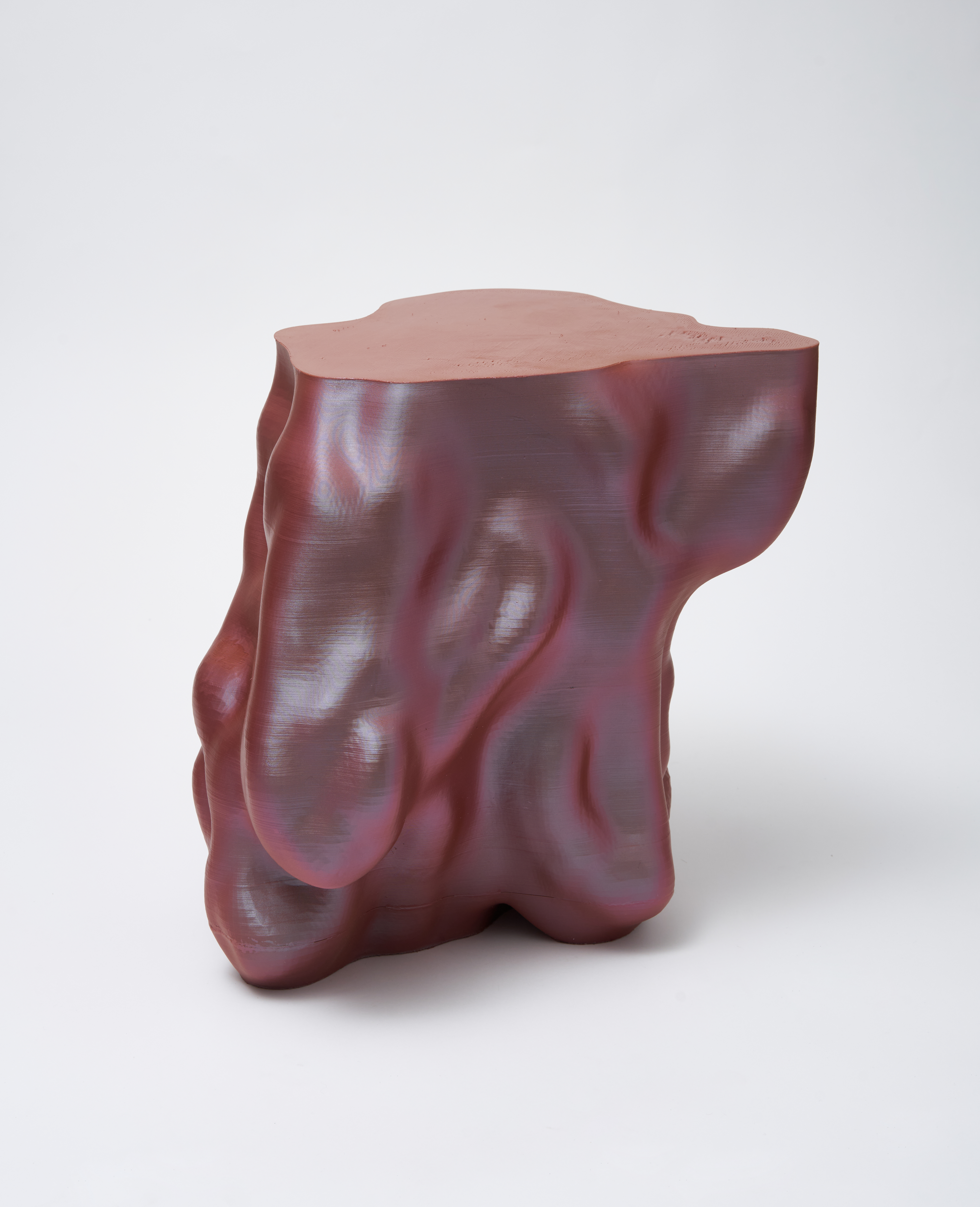
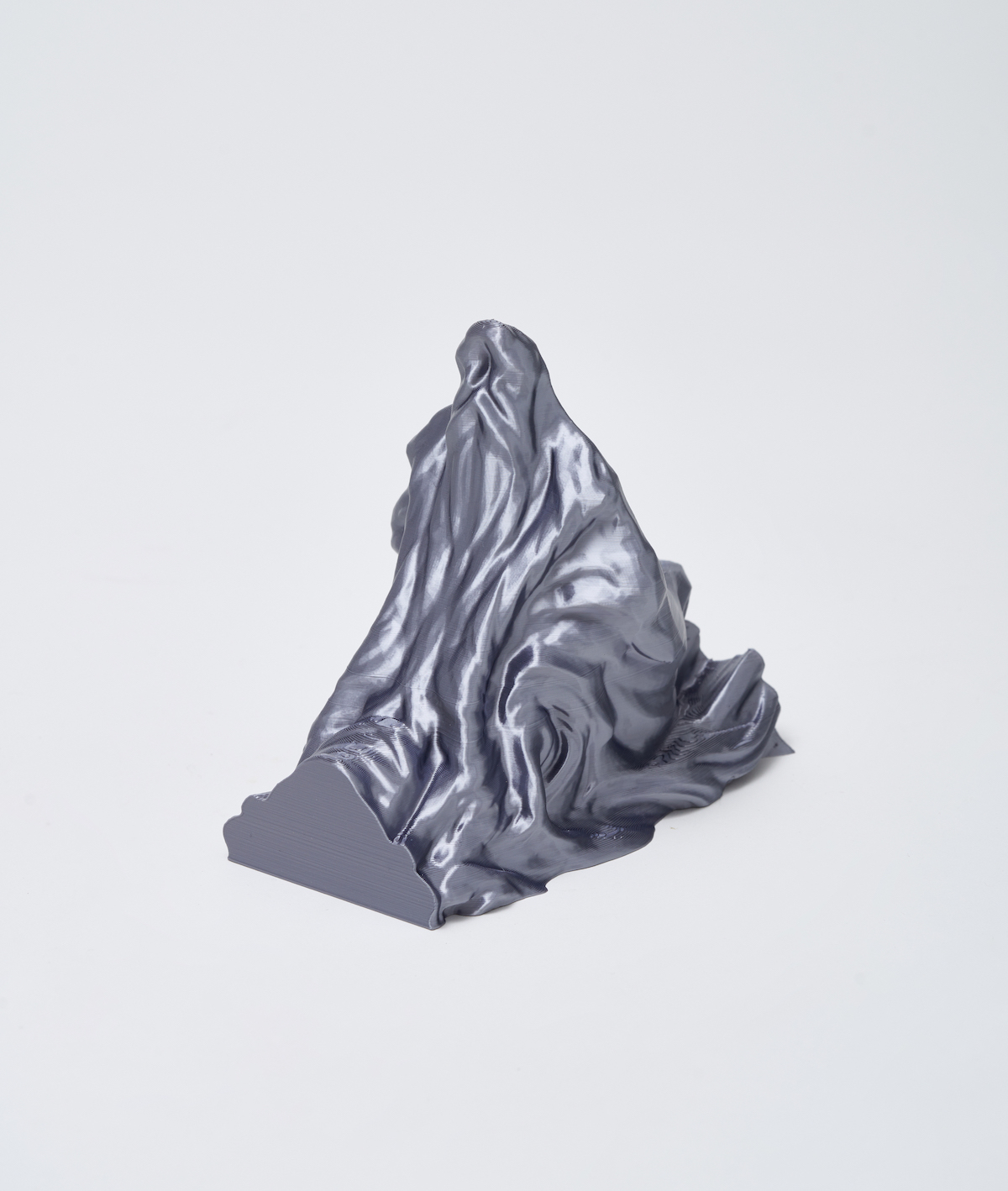

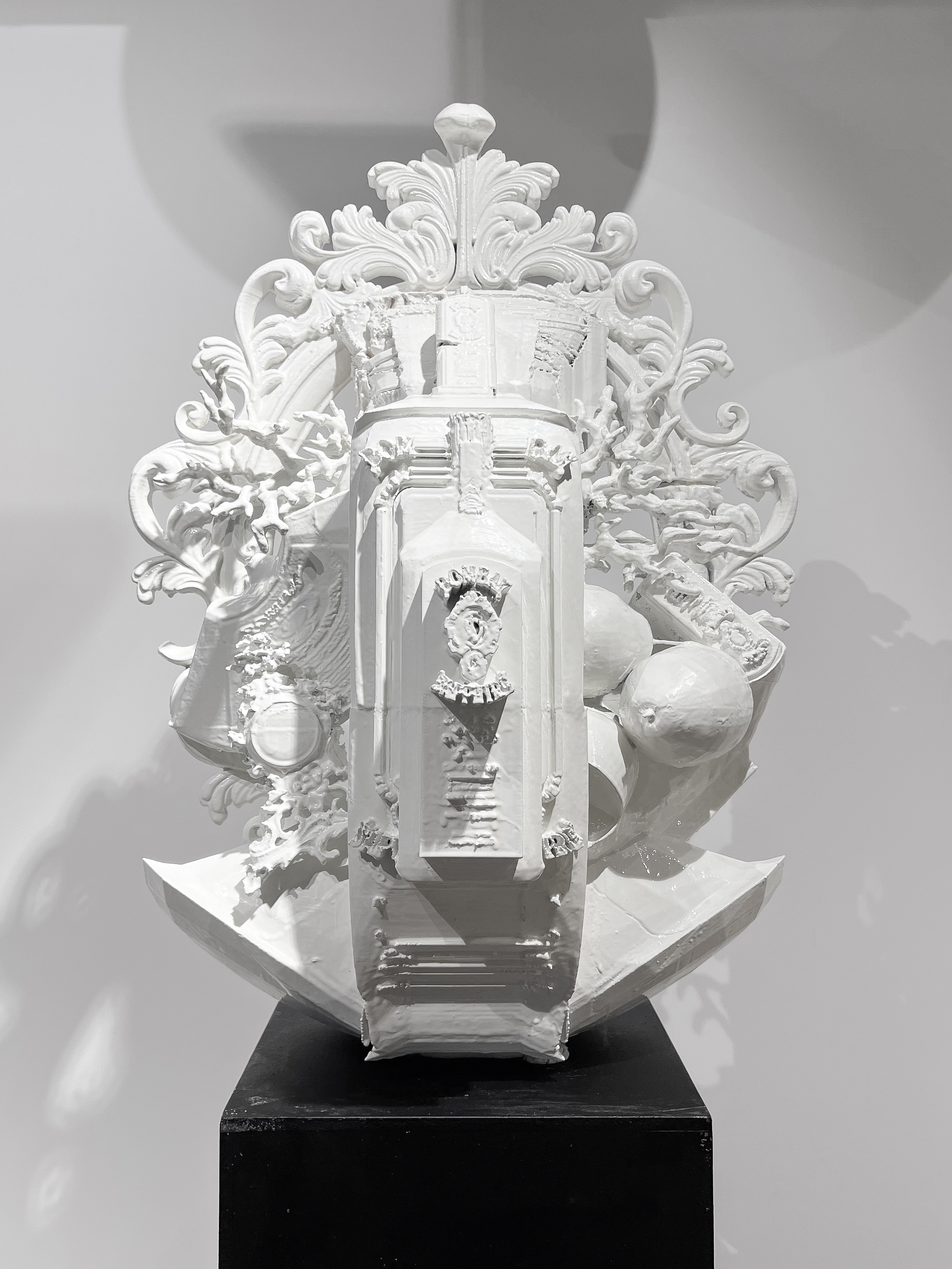
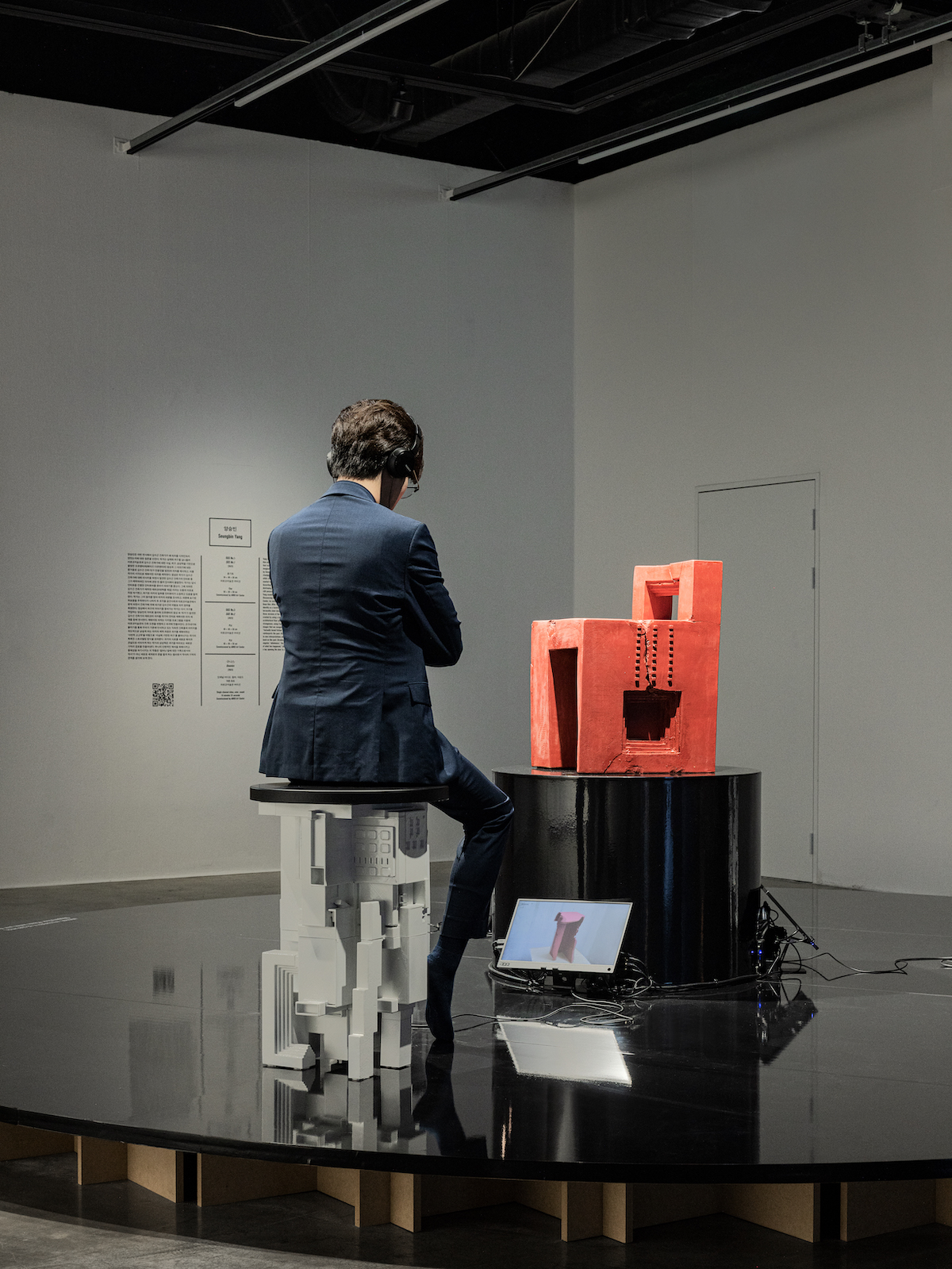
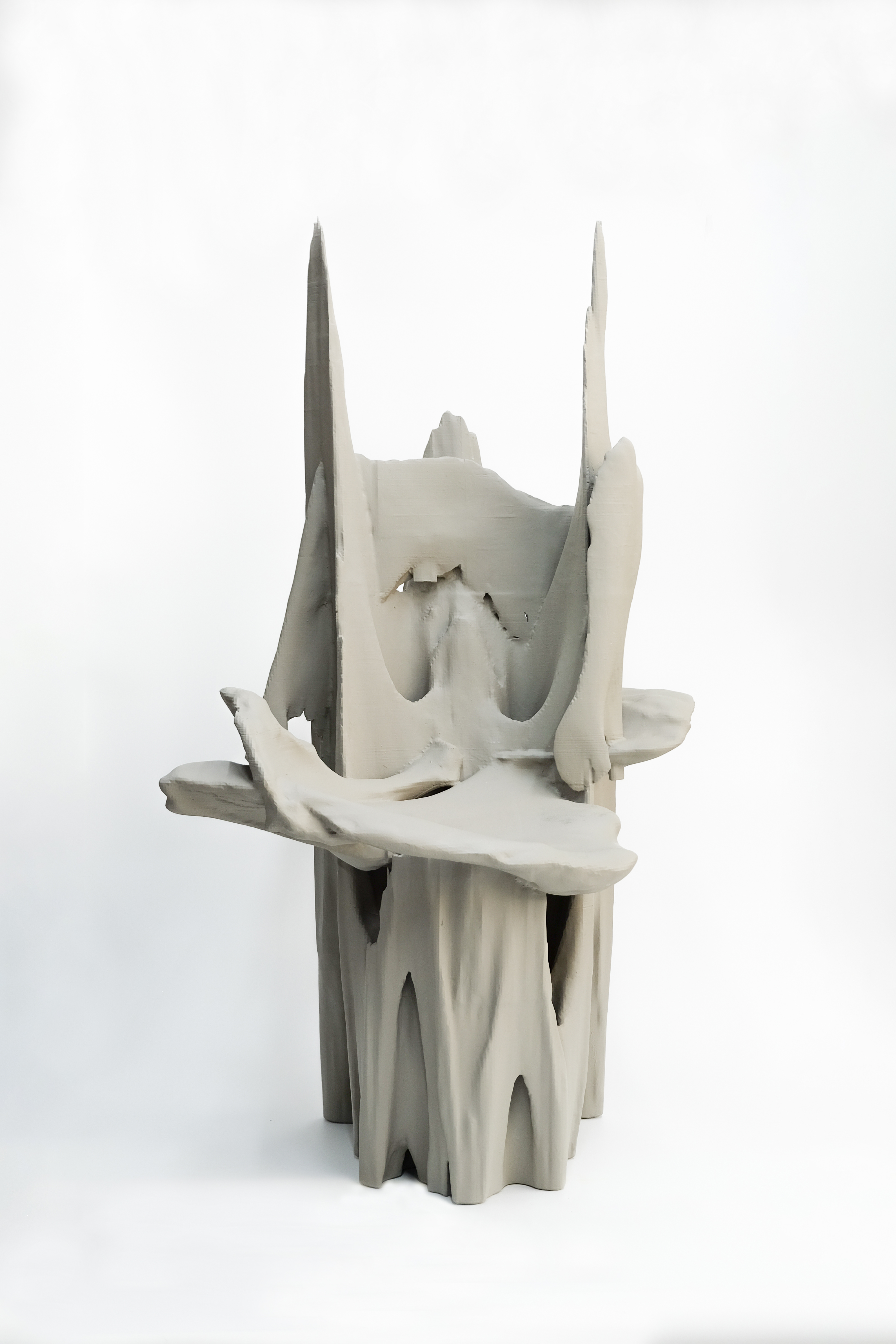


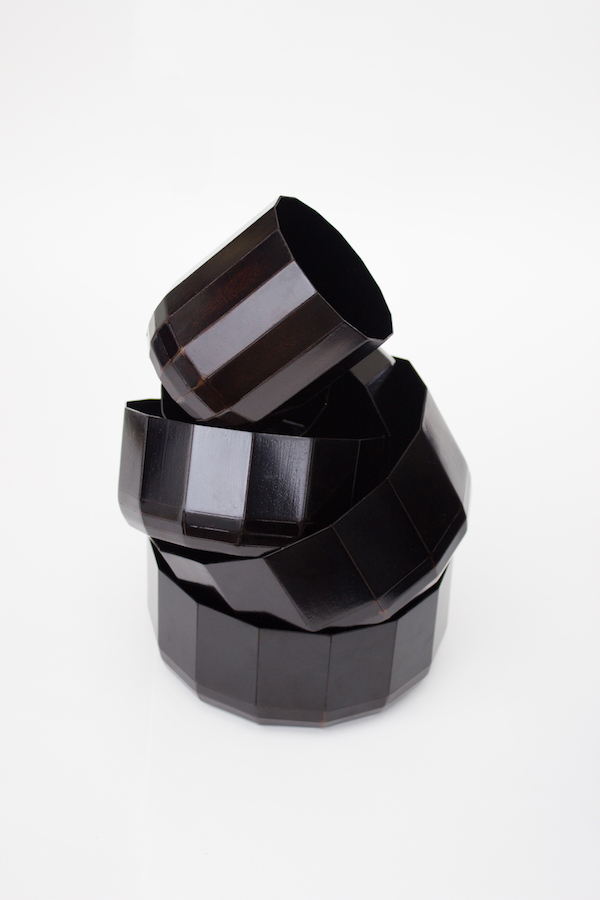
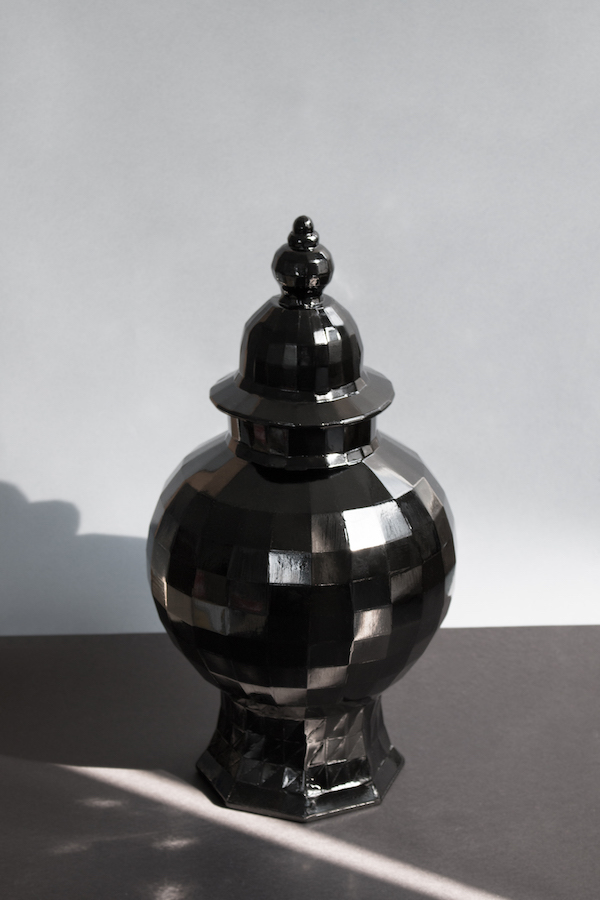


Deep Fried_Thonet (Printed Ver.)
PLA
2026
430 (W) X 520 (L) X 840 (H) mm


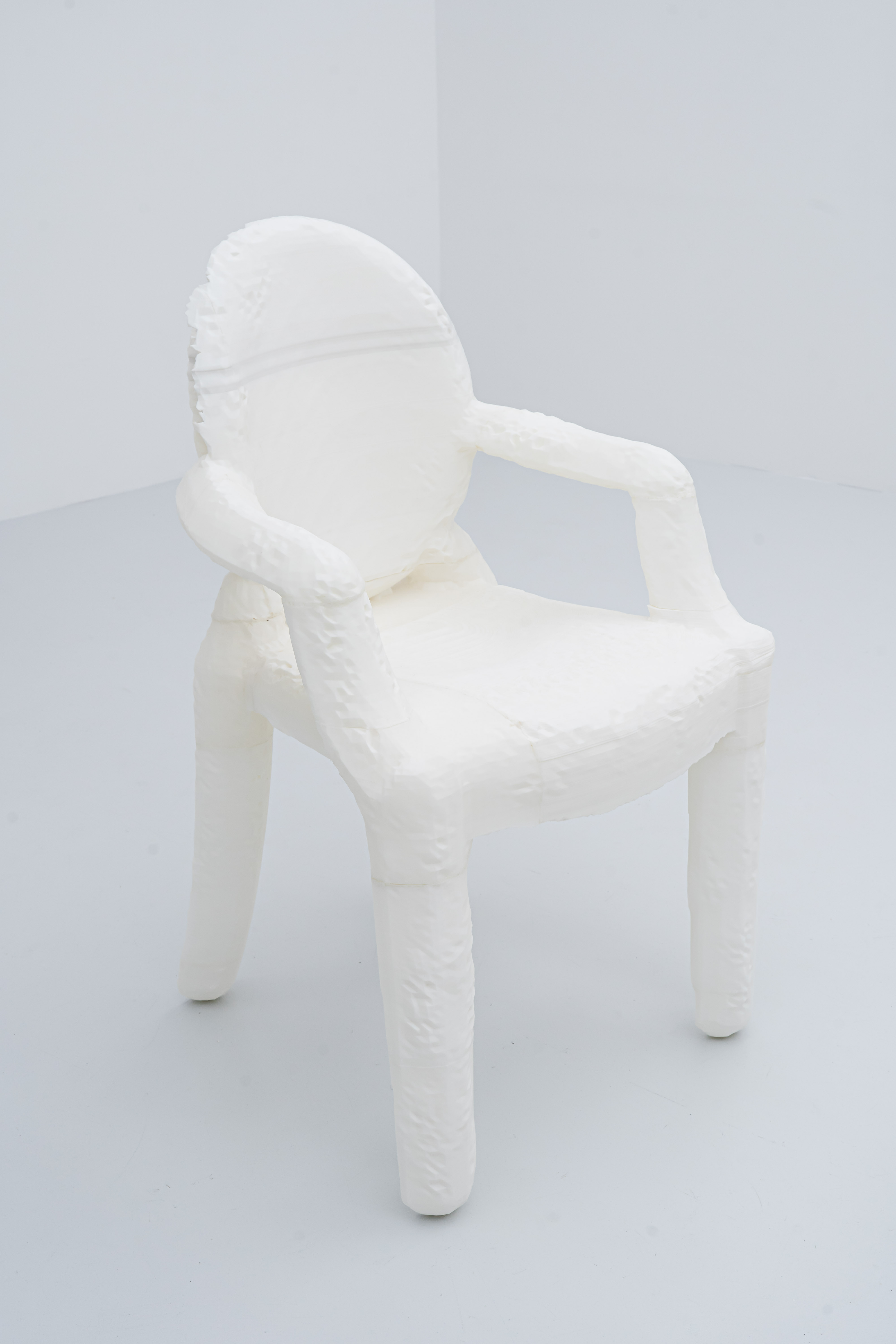
Deep Fried_Thonet (Crafted Ver.)
Wood, Crystal
2026
430 (W) X 520 (L) X 840 (H) mm
오리지널을 우리는 처음 만들어진 형태, 변형되기 이전의 순수한 근원으로 생각한다. 그러나 오리지널이란 고정된 실체가 아니라, 우리가 사물에 부여한 관념에 가깝다.
Maarten Baas의 Smoke 시리즈는 이 관념을 파괴하려 했다. 그는 전통적인 가구를 불로 태운 뒤 파괴된 표면 위에 보존 처리를 입혀, 소멸 직전의 상태를 영구화했다. 파괴와 보존이 동시에 존재하는 이 표면은, 오리지널이라는 개념 자체를 유물로 만들어버렸다.
그것이 단지 아름다운 형태에서 비롯되는 것인지, 아니면 시간이 축적한 역사에서 비롯되는 것인지, 혹은 우리가 집단적으로 부여한 상징성 때문에 특별해지는 것인지 생각하게 된다.
그래서 재창조의 단계에서는, 이 질문을 디지털의 영역으로 가져왔다. 디지털 환경은 완전한 복제가 가능한 공간으로 여겨진다. 손실 없이 복사되고, 영원히 저장되며, 어디서든 동일하게 재현된다고 믿어진다. 그러나 데이터는 복제되고 이동되는 과정에서 맥락을 잃는다. 파일명이 바뀌고, 메타데이터가 탈락하고, 원본이 어디였는지 점차 흐려진다. 형태는 유지되지만 출처는 풍화된다. 디지털 풍화를 통해, 오리지널의 맥락, 고정관념, 이미지는 변형된다. 진정한 오리지널은 없다는 생각으로, 우리가 오리지널이라 부르는 것은 언제나 이미 변형된 무언가이며, 이 재창조 작업은 그 풍화를 가시화하고, 원본이 가진 고정된 이미지를 해체하려는 시도다.
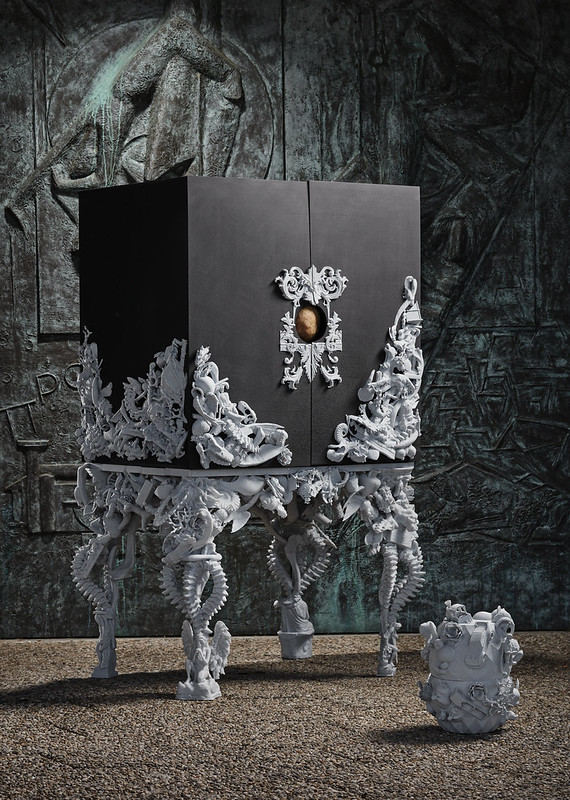
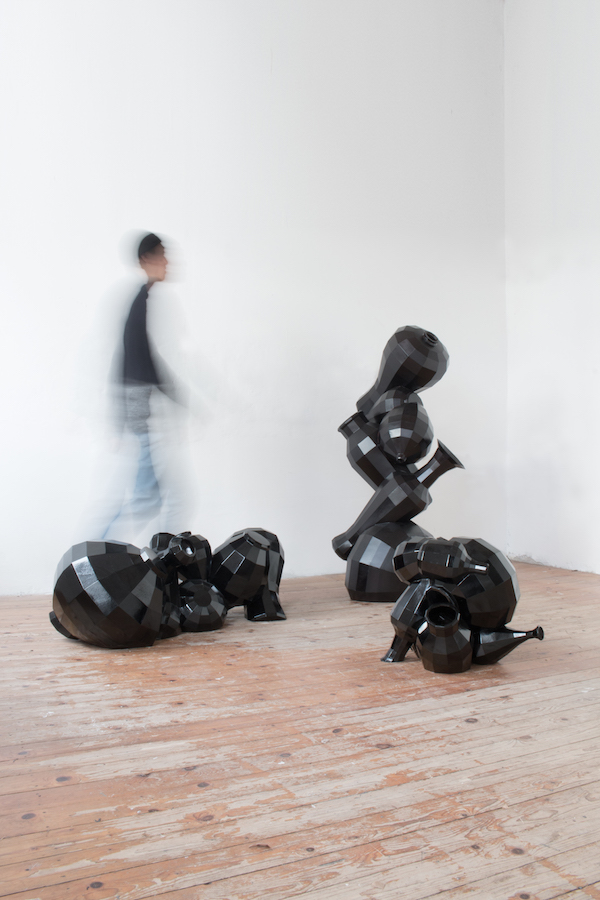
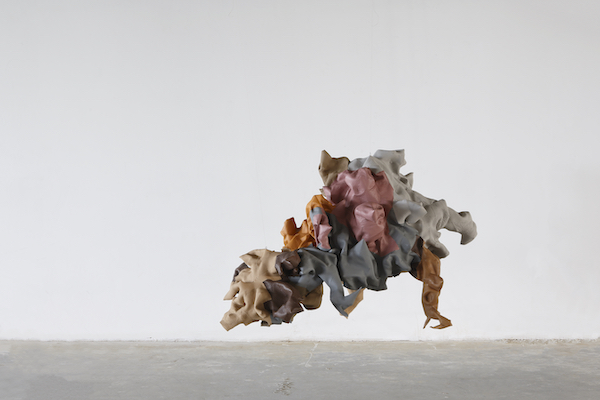
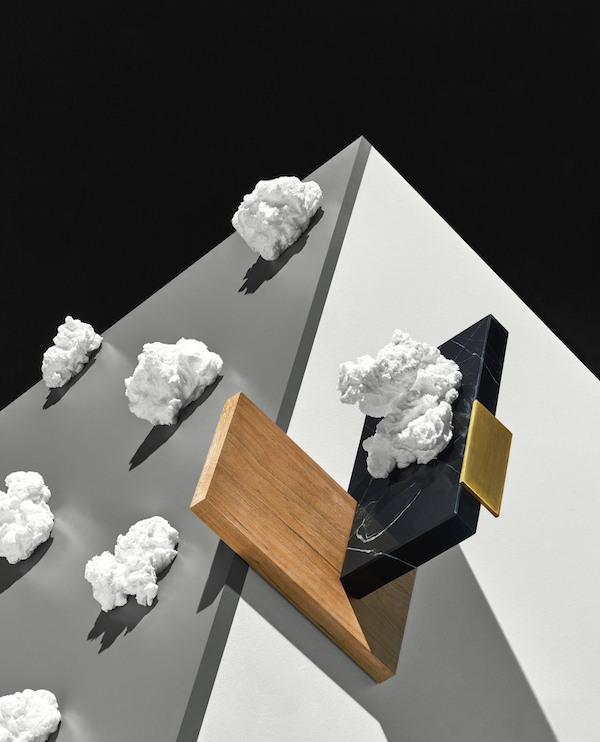
토넷 체어의 고해상도 이미지를 AI 알고리즘으로 100회 열화시켰다. 열화의 과정을 거친 최종 이미지에서 곡선은 직선으로 단순화되고, 컬러는 초록과 노란색으로 변질된다. 이 이미지를 바탕으로 두 가지 의자를 제작했다. 하나는 AI가 이미지를 재해석해 3D 모델링한 비실재의 의자를 3D 프린팅으로 실재화한 것이며, 다른 하나는 인간의 손으로 전통적인 재료와 방식을 사용해 이미지를 직접 재현한 것이다.
오리지널이란 고정된 실체가 아니라 반복된 변형과 풍화 위에 구성된 관념이다. 이 작업은 그 풍화를 가시화하고, AI와 인간의 손이라는 두 재현 방식을 통해, 재창조 행위 자체가 오리지널 신화를 해체하는 동시에 새로운 오리지널을 생성하는 역설을 드러내고자 했다.
-
We tend to think of the original as the form in which something was first made — a pure origin before any alteration. Yet the original is not a fixed entity; it is closer to a notion we project onto things.
Maarten Baas's Smoke series sought to destroy this notion. He burned traditional furniture and then applied a preservative treatment over the destroyed surface, making permanent a state on the verge of disappearance. This surface, in which destruction and preservation coexist simultaneously, turned the very concept of the original into a relic.
One is left wondering whether that quality arises from beautiful form alone, from a history accumulated over time, or from the symbolism collectively assigned to an object by people.
This question was brought into the digital realm at the stage of re-creation. The digital environment is widely regarded as a space where perfect replication is possible — where copies are made without loss, stored indefinitely, and reproduced identically anywhere. Yet data loses its context in the process of being copied and transferred. File names change, metadata drops away, and the location of the original gradually blurs. Form is preserved, but provenance weathers away. Through digital weathering, the context, fixed assumptions, and image of the original are transformed. Proceeding from the conviction that there is no true original — that what we call the original is always already something altered — this work of re-creation seeks to make that weathering visible and to dismantle the fixed image the original carries.
A high-resolution image of the Thonet chair was degraded one hundred times using an AI algorithm. In the final image produced through this process of degradation, curves are simplified into straight lines and color shifts toward green and yellow. Two chairs were produced from this image. One materializes, through 3D printing, a non-existent chair that AI reconstructed and modeled from the image. The other is a direct re-creation of the image by human hands, using traditional materials and methods.
The original is not a fixed entity but a notion constructed upon repeated transformation and weathering. Through this work, that weathering is made visible, and through two modes of re-creation — the hand of AI and the hand of the human — the aim is to reveal the paradox in which the act of re-creation simultaneously dismantles the myth of the original and generates a new original.
